Individuals
Reading the evidence is half the job. Saying it well is the other half.
ASTRA Ready editorial ·
A seller can read a security report correctly and still lose the deal.
They know the report covers the hosting platform and not the customer's own configuration. They know the pilot ran in one region, for six weeks, with forty users. They know the quote leaves out usage charges. Then the customer asks, "So we're covered?" and the seller freezes, over-explains, or says "yes" to keep the meeting warm.
Judgement without the conversation does not help the customer. The conversation without judgement is how deals end up stalled in review.
What changed at ASTRA
ASTRA's programmes have always taught people to read the evidence behind a deal: what a document proves, what an offer costs, who has to approve it. Since November 2026 every programme also teaches the conversation that follows.
Each ASTRA certification programme now includes a Sales Craft track. Its modules cover the moves a seller makes in every deal:
- Discovery. The question that changes the decision, not the question that fills the call.
- Qualifying. Is there a real deal, and who actually decides?
- Value. The outcome in the customer's own words, bounded by what the evidence shows.
- Objections. The honest answer that keeps the deal alive.
- Commitment. What you can commit to, the next step, and the proposal wording that will survive review.
After each module there is a role-play with an AI customer who has read the same documents you have. Partway through, the customer pushes: a request to stretch a pilot result, a question the evidence cannot answer, a deadline that tempts an early promise. You are graded on a published rubric, and one criterion is simple: did you claim anything the evidence does not support?
How the exams changed
The supervised examinations follow the same idea. Each case is one customer situation with its documents. Some tasks ask what the evidence establishes. Others ask what you would say, ask or commit to next, and the right answer is the move that stays inside the evidence, names the right owner and moves the deal forward.
These selling tasks count. A candidate cannot pass on evidence-reading alone: the standard requires at least half of the selling tasks to be answered correctly.
Three habits worth building now
You do not need a programme to start practising. Three habits carry most of the weight:
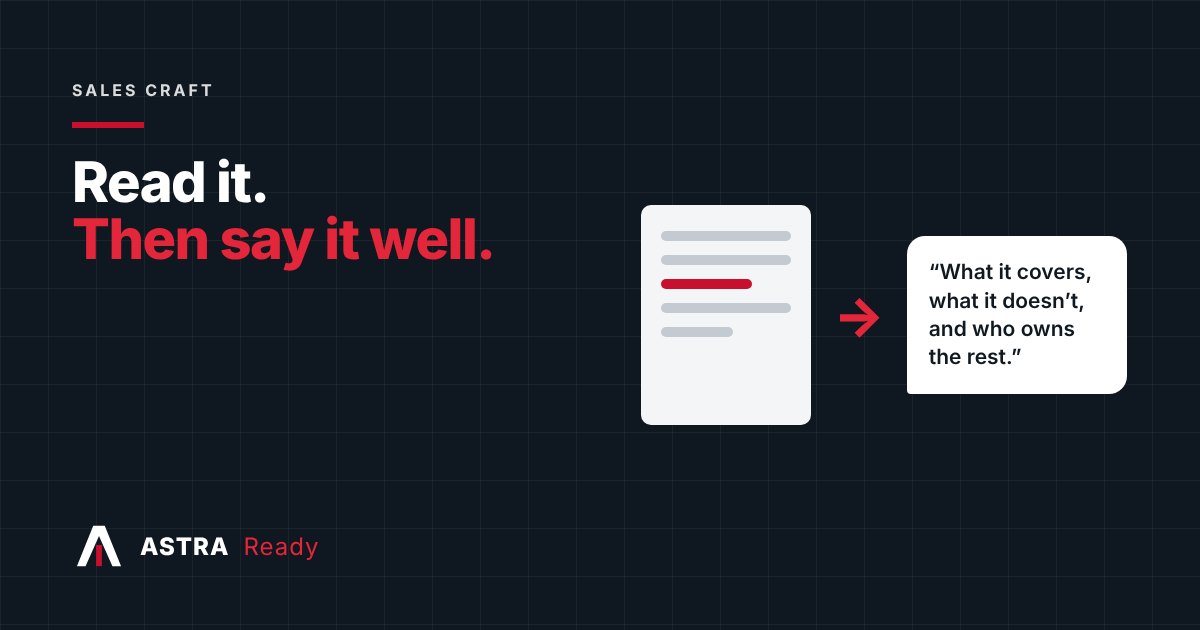
- Answer the question under the question. "So we're covered?" usually means "Will I be blamed if something goes wrong?" Say what the report covers, what it does not, and who owns the rest.
- Bound every number. "In the pilot, with forty users over six weeks, ticket handling time fell by about a fifth" is a claim a reviewer can accept. "It cuts handling time by twenty per cent" is a claim a reviewer will circle.
- Make the next step smaller and certain. A two-week extension of the pilot to a second team, with an agreed measure, is easier to approve than a company-wide rollout, and it keeps the deal moving.
Where to practise
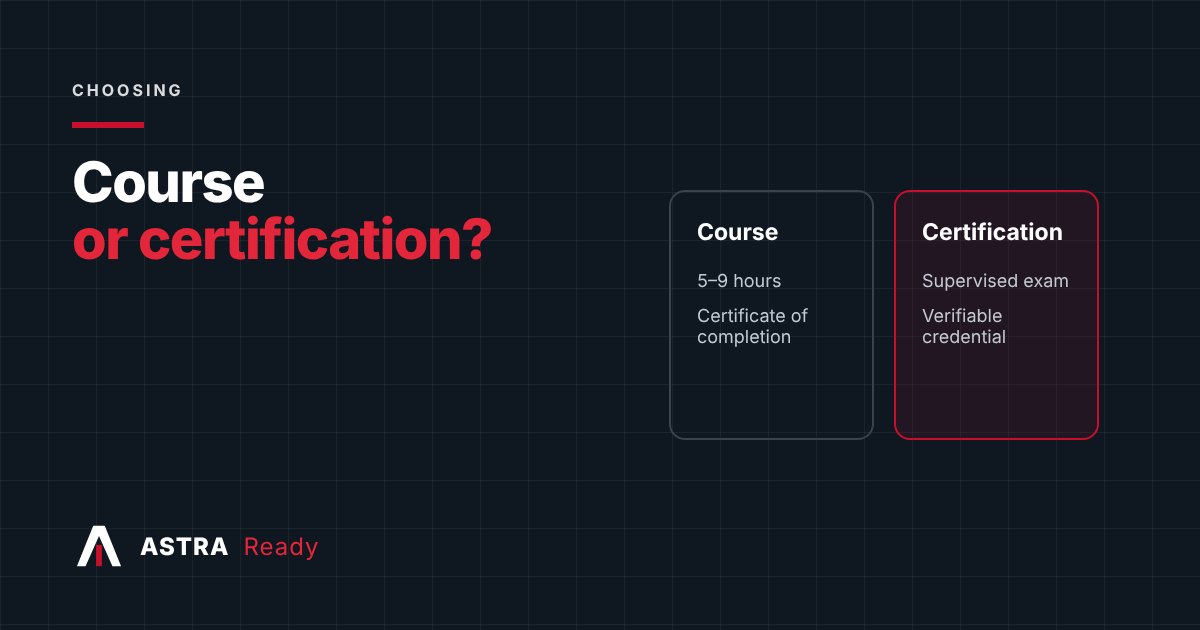
If you want the full path to a credential, the ASTRA Tech Sales Associate programme builds these habits for first-line deals, and the ASTRA Tech Sales Advisor programme for larger, multi-party ones. If you want one skill quickly, the Tech Sales Craft course covers the whole sales cycle in about eight hours, with role-plays and a certificate of completion.
Relevant programme: See the certification programmes at https://www.astraready.com/programmes/ and the courses at https://www.astraready.com/courses